

AMY WILIAMS DESIGN
INSPIRED BY SPACE, NOT TRENDS
Written - Amy Karl
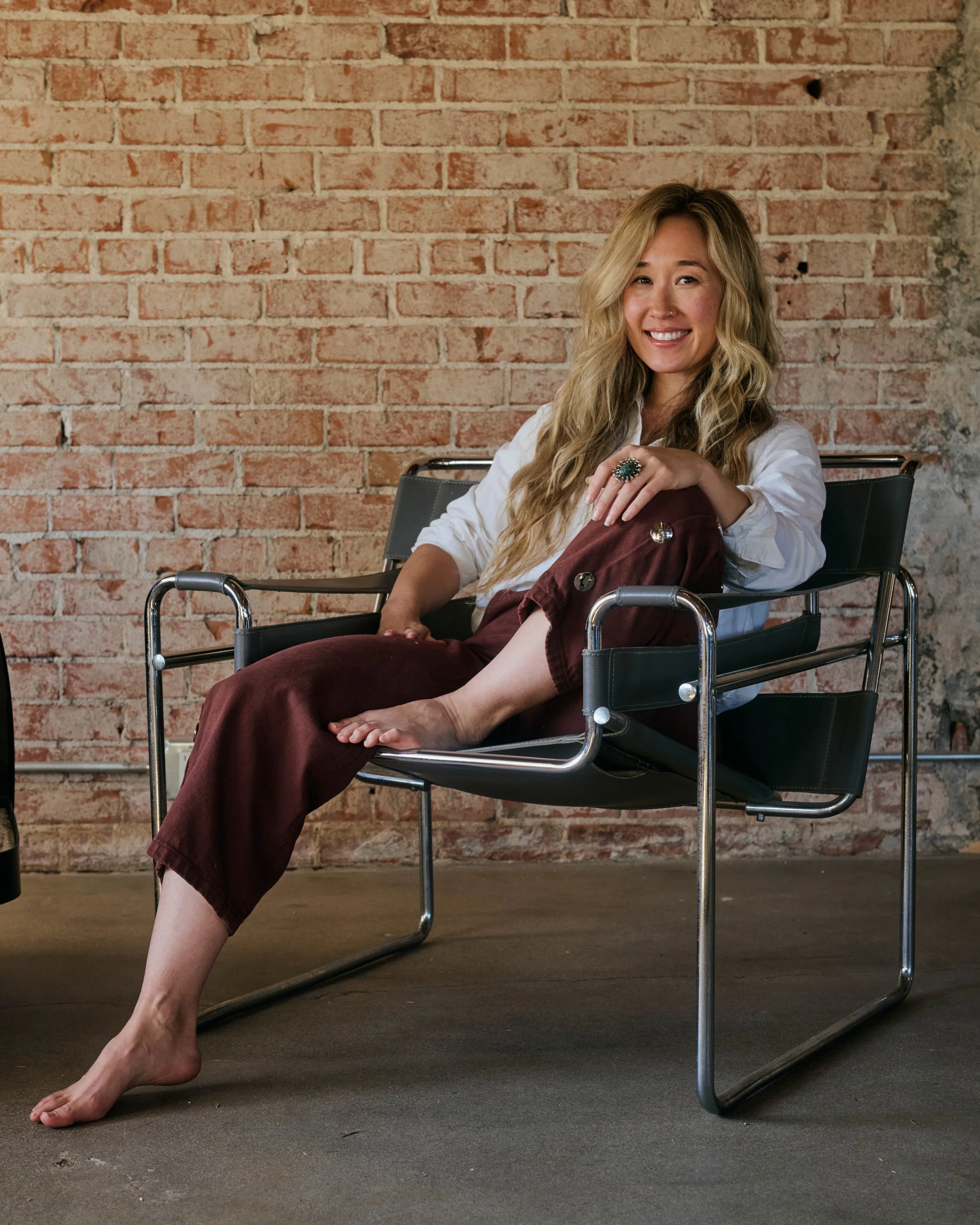
Photo: Taylor Gonzalez
When I called Amy of Amy Williams Design to interview her for this article, the first thing I told her—while looking through her designs—was that her work didn’t look like anyone else’s I’d come across in recent weeks.
She thanked me and said,
“In today’s world of social media, people are mostly fed what they should be inspired by, rather than encouraged to look at life through their own singular lens.”
When I asked whether there was a specific kind of design she gravitates toward—modern, mid-century, traditional—her response was both measured and simple.
“We all want timeless design,” she said. “But if you’re unabashedly yourself in your design, I believe that can be timeless. It’s in the unguardedness, the unworriedness that allows me to create something new and unexpected.”
In other words, derivative design isn’t Amy’s thing.
“I can get inspired by a single piece of crinkled trash,” she told me.
Her comment reminded me of the Academy Award–winning film American Beauty. During his Oscar speech, the screenwriter shared that the screenplay was inspired by something as simple as a plastic bag blowing in the wind across a freeway. Inspiration, after all, doesn’t always arrive in obvious places.
Amy approaches space in much the same way.
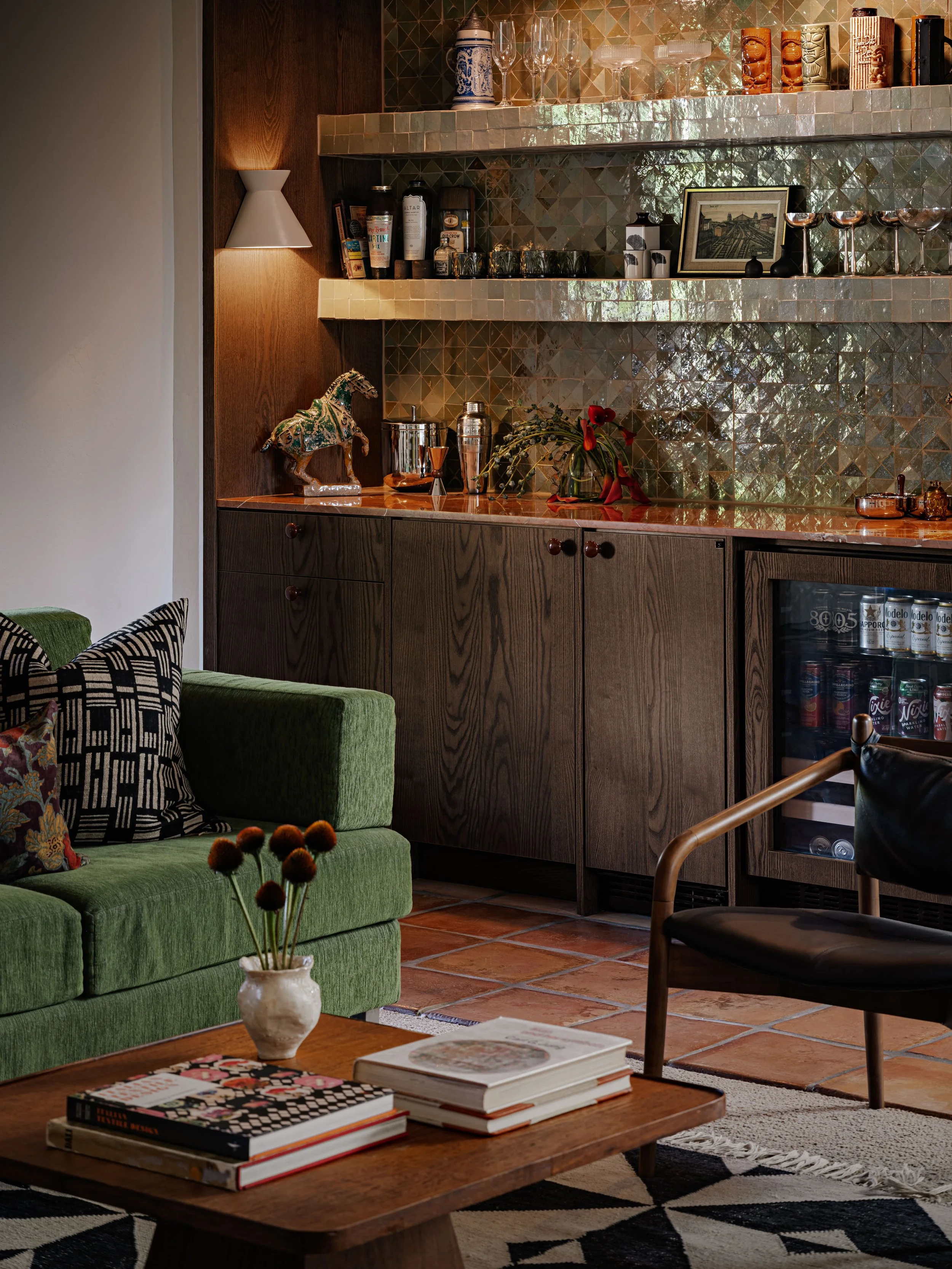
“The movement within space doesn’t need to be so cut and dry,” she said. That’s why understanding the people who live in a space is essential to her process.
She recently completed a project with a small nook off the dining room for a self-proclaimed bookworm. Knowing his story, the nook didn’t need to be opened up or knocked down. Instead, it became a quiet retreat within the home for reading.
“Sometimes functionality is optimized by maximizing a little unfunctionality,” she explained.
She points to a kitchen in Italy as an example. These are spaces where you might have to turn a corner to reach alfresco dining. Technically, if you were starting from scratch, you might choose a more open plan. But sometimes design begins with where you already are, and you can learn to love the space just as much.
Cultivating a creative craft rarely happens in a straight line. In fact, many of the most creative people didn’t initially set out to become who they eventually are, whether writer, painter, or interior designer. Often, it’s the life lived along the way that brings them there.
Amy’s path reflects that idea.
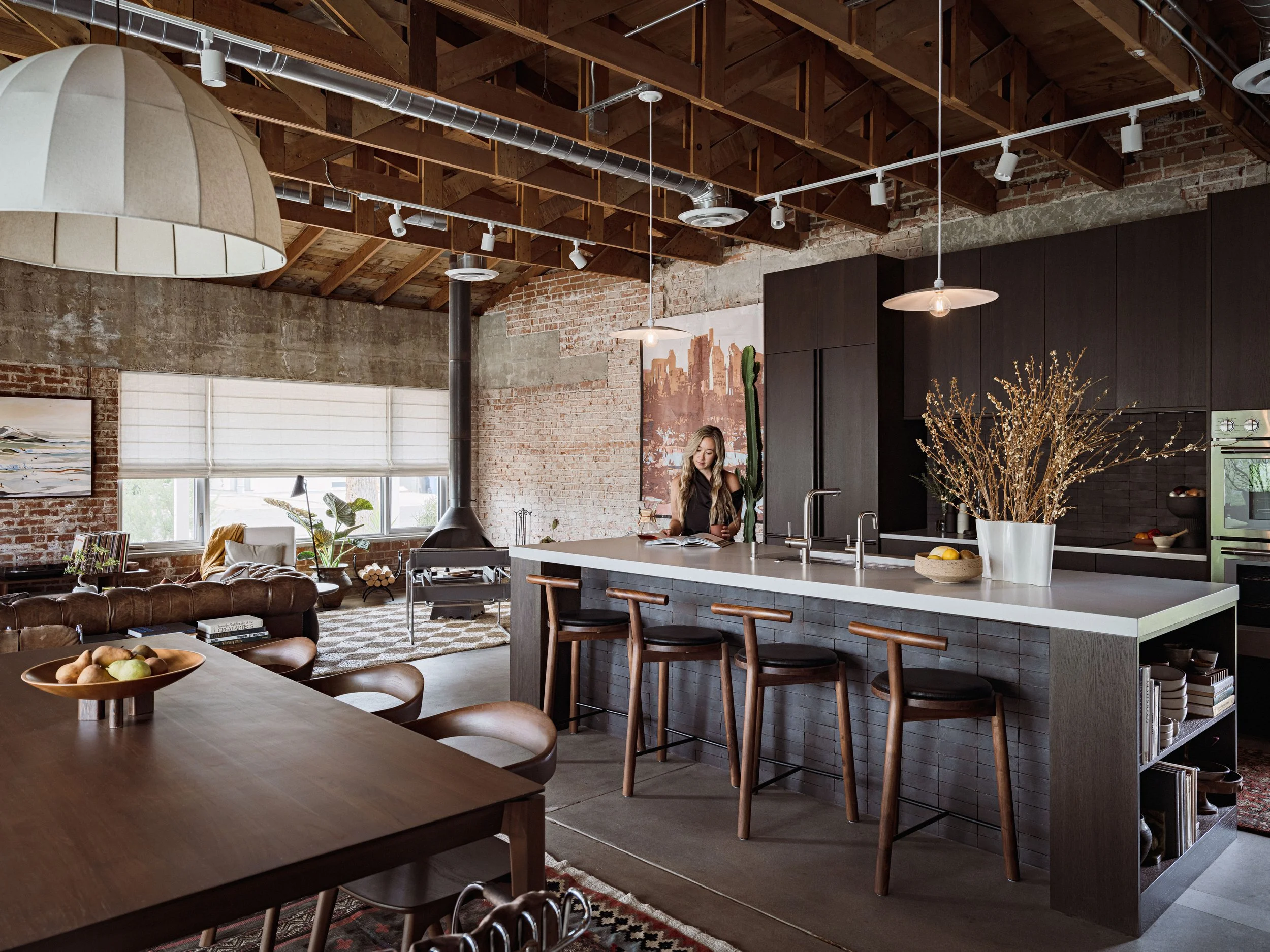
Photo: Jason Roehner
Born in Germany to a father in the military and a Korean mother, Amy spent parts of her childhood in Germany and Korea before her family eventually settled in the Midwest. Travel was always central to her upbringing, and it continues to inform her design perspective today.
While design trends often become homogenized, Amy finds inspiration in places others might overlook. In Kenya, for instance, she noticed how tires were pressed through concrete to create texture and pattern. It’s that willingness to look between the lines that shapes her aesthetic.
Amy moved to New York, where she began working in marketing and PR. But it was a short stint at the Gramercy Park Hotel that ultimately revealed her passion for design. From there, she moved between hospitality and design, refining her eye for space, atmosphere, and experience.
When I asked whether she insists her personal stamp be evident in every project, Amy pushed back on the idea.
She told me she has a clear vision, but also a sense of flexibility. Her process is as much about understanding the people who inhabit the home as it is about the structure itself.
“I look at what they’re wearing, how they live,” she said. “Their story becomes part of the design.”
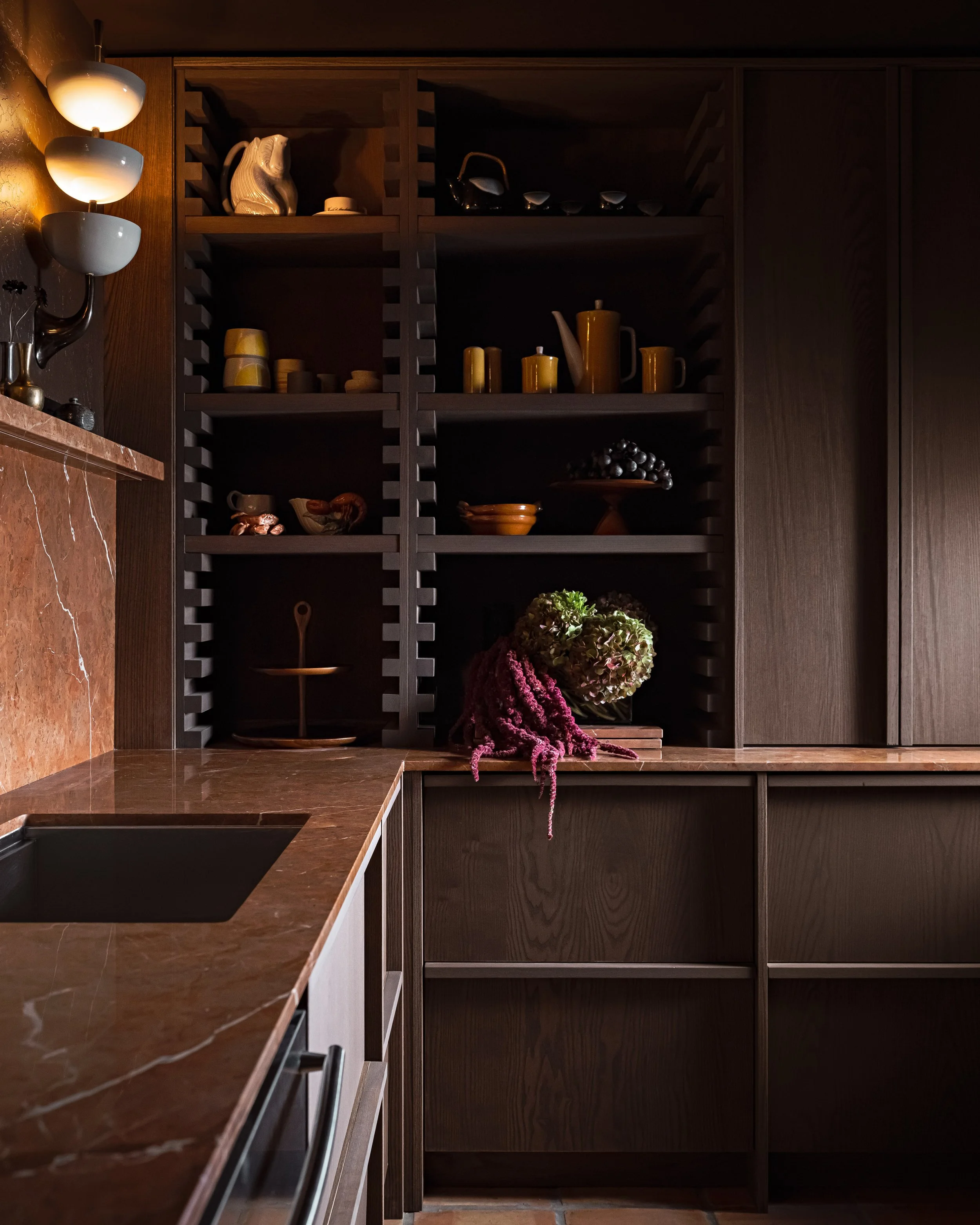
For a fuller view of her work, Amy’s new website, launching soon, will showcase a range of her projects and the evolving language of her design. Spaces shaped not by trends, but by the stories of the people who live in them.
Amy Williams Design
@AmyWilliams
Amy-Williams.com