

Maderos - Paradise Valley
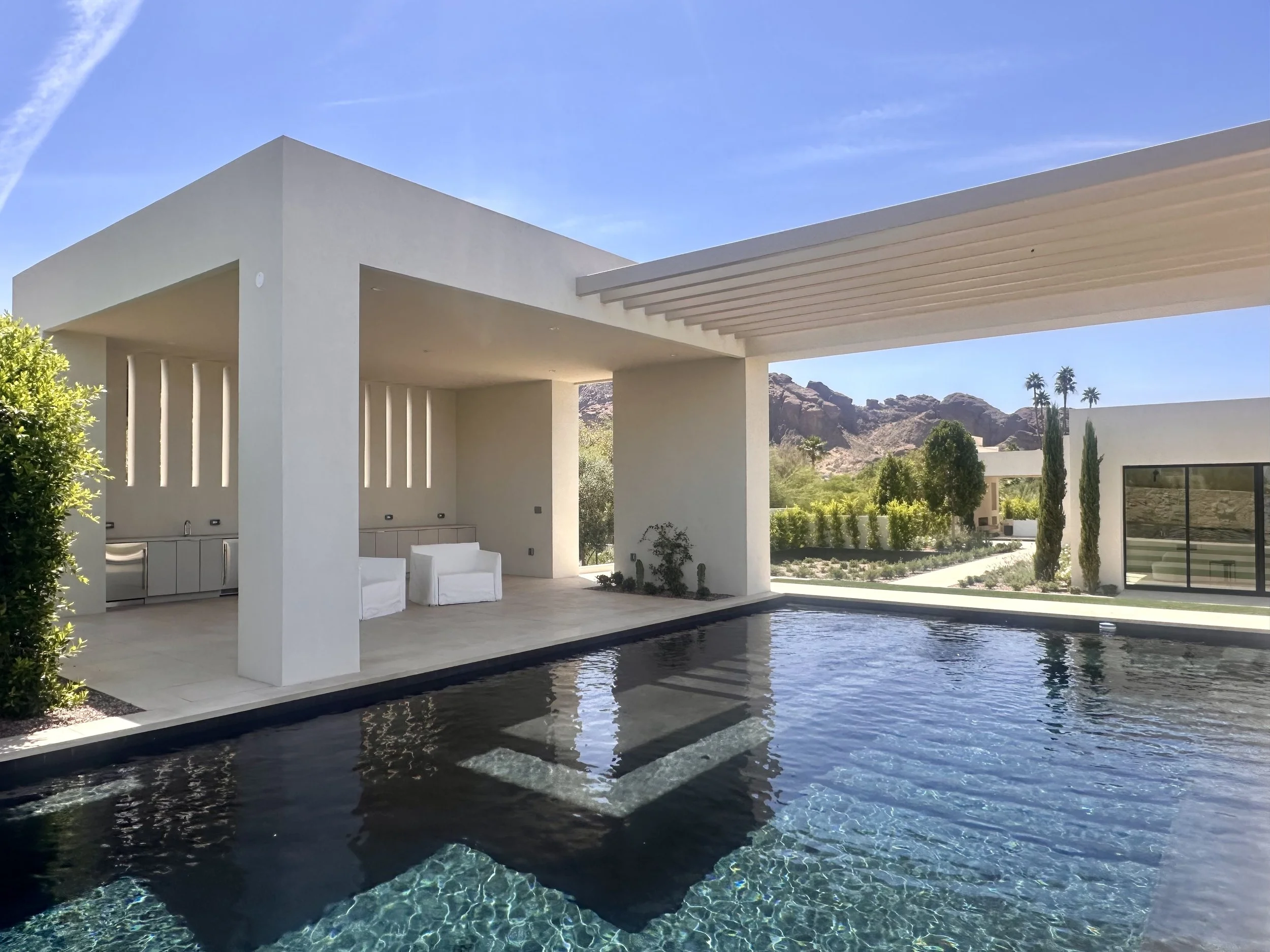
Arizona’s First “Biophilic Estate”
In the age of overstimulation and constant connectivity, our greatest luxury may be the ability to disconnect and reconnect with nature, with stillness, and with beauty. Biophilic design, an approach rooted in our innate affinity for the natural world, invites us to do just that.
For the spring edition of Desert Design Week, we had the pleasure of collaborating with artist Rika Kova, Rossland Holdings, and their creative director and real estate representative Justin Shea, on a special Desert Design Week moment at Maderos — Arizona’s first “Biophilic Estate” in Paradise Valley. The project brought together sculpture in its many forms, highlighting the shared language between art, home, and nature.
Natural limestone floors ground the space with the cool, quiet presence of desert stone. Hand-applied plaster walls shift in tone with the changing light, echoing the subtle transitions of the desert sky. Expansive glass walls open fully to private courtyards and frame sweeping views of Camelback Mountain. Every detail is considered, every finish intentional, designed to create a sense of place that is rooted in the elements.
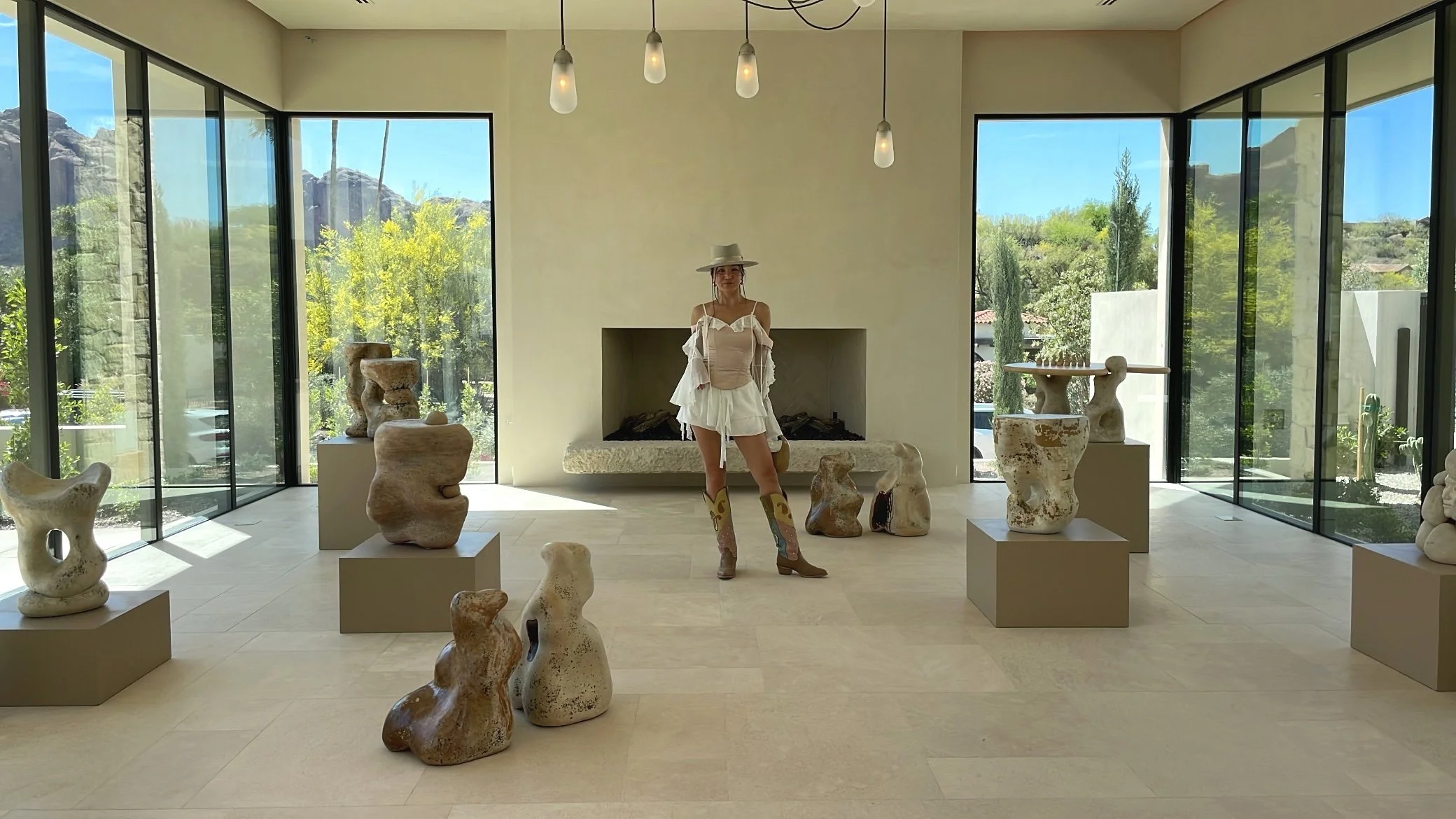
Photo: Hannah Klemm
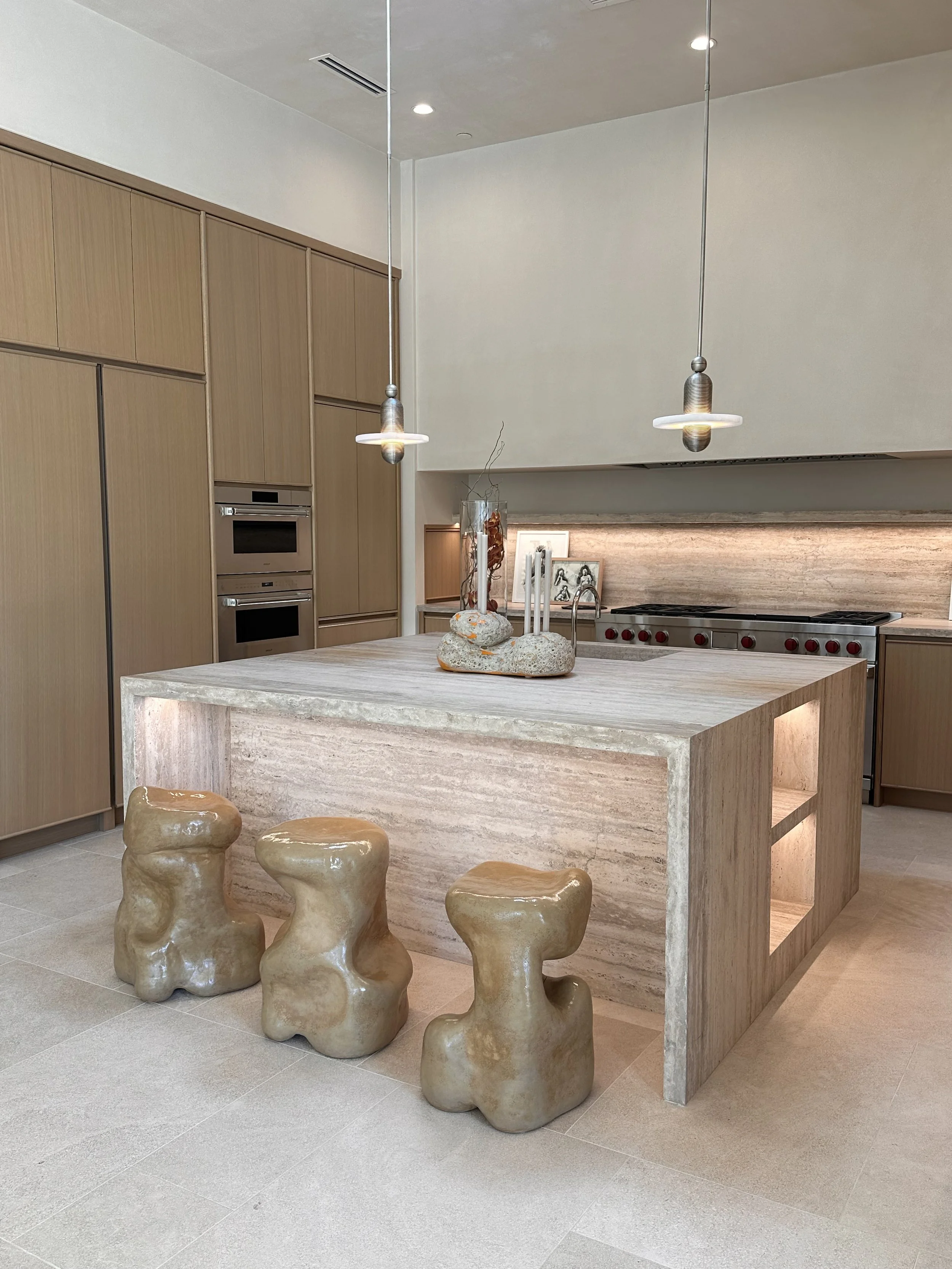
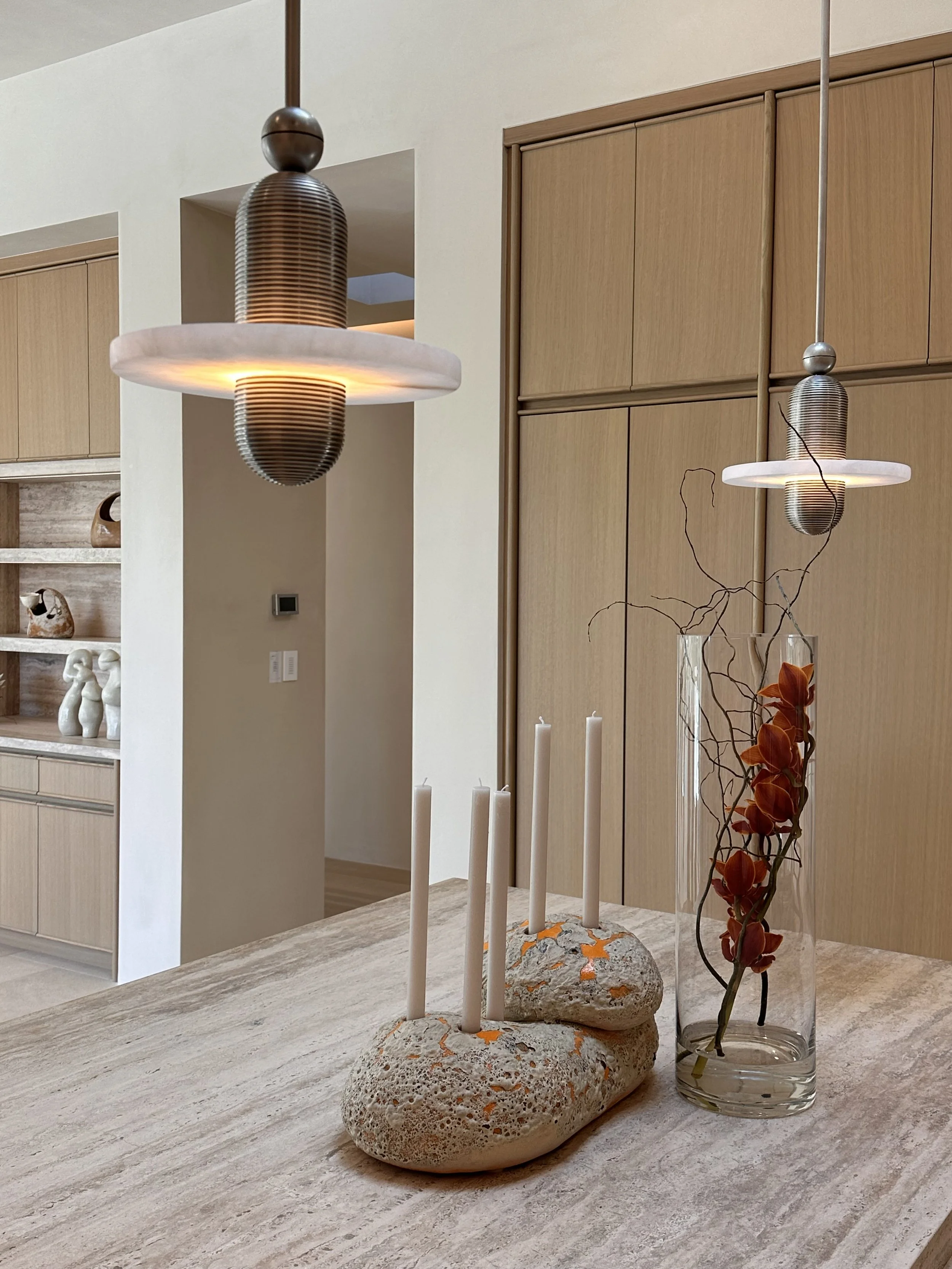
Rika’s sculptures, with their abstract forms and softened edges, mirrored the natural irregularity of desert boulders or seedpods—shapes that are familiar without being predictable. Their finishes and earthy tones harmonized with the stone and plaster surfaces, enhancing the sensory depth of each room. Her works were placed not just as decoration, but as punctuation within the spatial rhythm of the home, occupying rooms, anchoring shelves, nestling into niches like found objects shaped by time.
That invitation to engage with art and space, both physically and emotionally, strengthened the connection between person, place, and home. We need more design and collaboration like this in today’s digitally dominated world.
More than a trend or hot topic, biophilic design is a quiet revolution that’s gaining renewed momentum in design circles, becoming more mainstream. Its premise is simple: humans thrive in environments that reflect the patterns, textures, and systems of the natural world. Its principles improve focus, reduce stress, and enhance emotional well-being.
Coined by biologist E.O. Wilson in the 1980s, the term “biophilia” refers to this biological affinity for the natural world. Biophilic design translates that theory into built environments that support psychological, physiological, and emotional well-being by incorporating natural elements, patterns, and spatial experiences into architecture and interiors.
The roots of biophilic design extend far beyond contemporary trends. They can be traced to centuries-old practices, from ancient Greek courtyards to Japanese Zen gardens, where human dwellings reflected and responded to the landscapes they inhabited. In modern Western architecture, early adopters like Frank Lloyd Wright championed these ideas. Wright’s “organic architecture” sought to harmonize structures with their environment, as seen in Taliesin West—design that exemplifies the biophilic ideals of integration with land, light, and material.
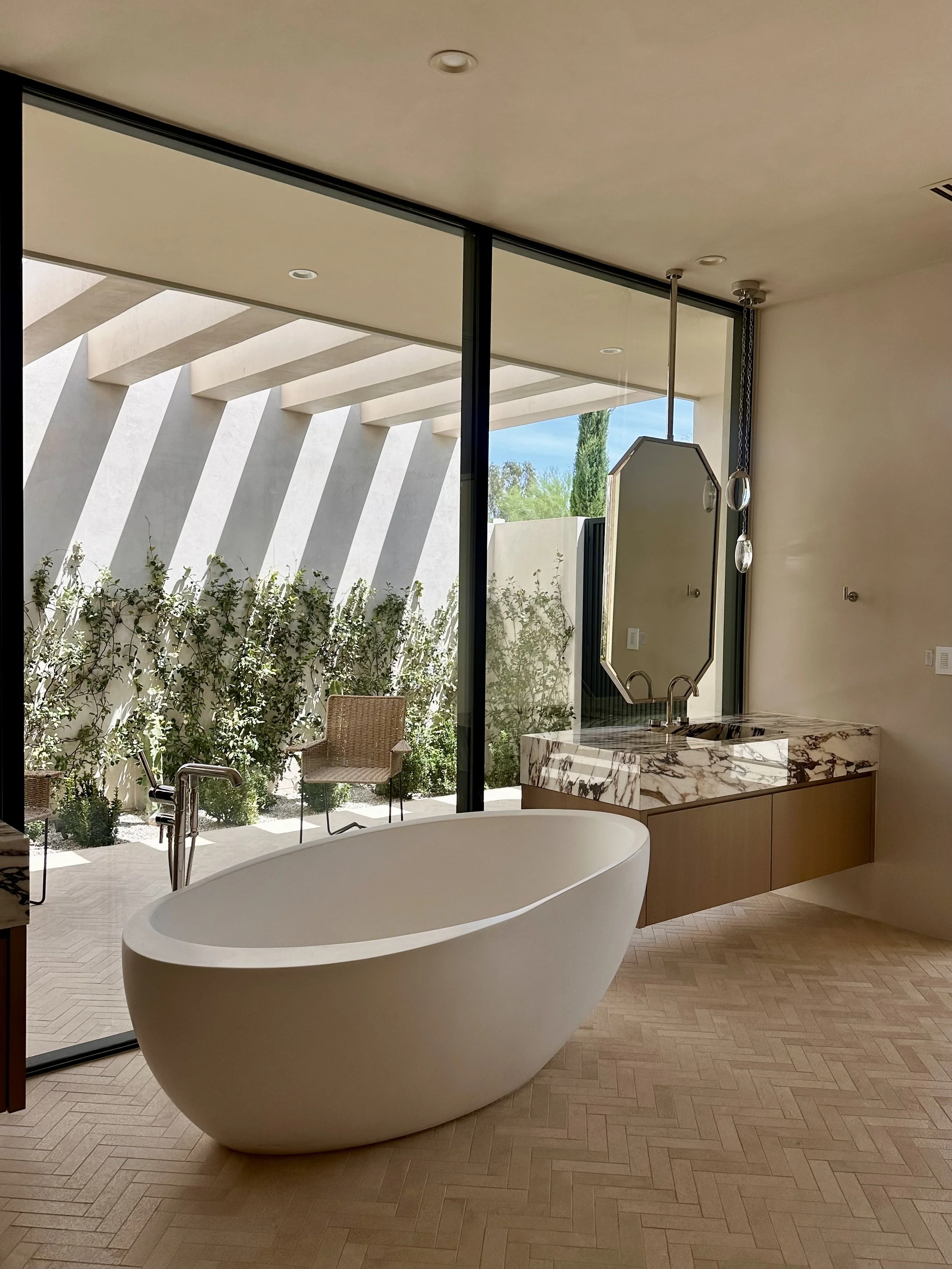
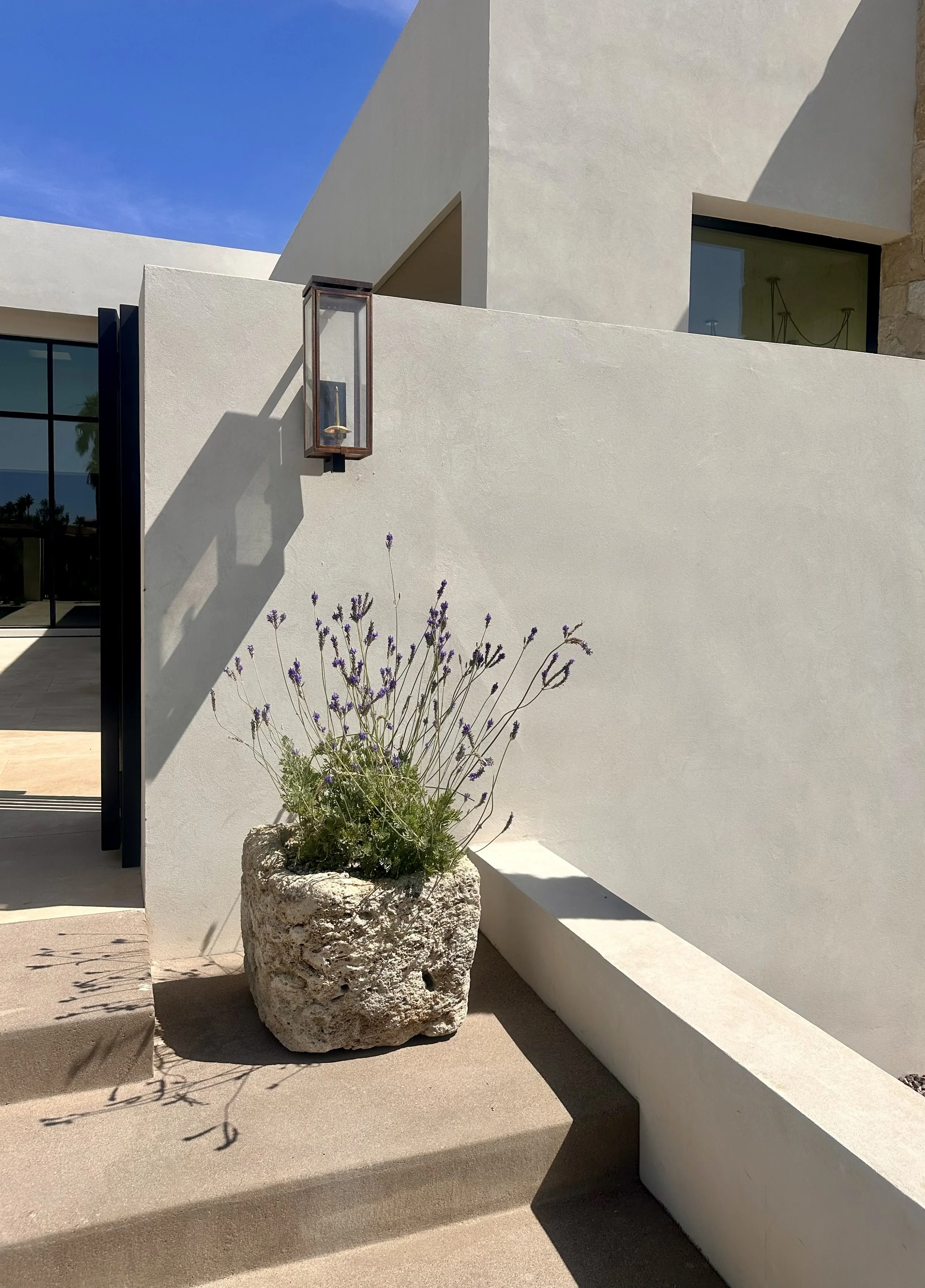

At Maderos, biophilic design manifests not only through material choices like limestone flooring and plaster walls, but through spatial relationships and sensory cues: courtyards that frame sky and shadow, airflow that moves through spaces like a breeze, and surfaces that invite touch and interaction. These aren’t decorative choices; they are intentional gestures that connect us to the desert, to heritage, and to a deeper sense of place.
Although the residence is no longer open to the public, we turned to Rossland Holdings creative director Justin Shea for tips on how to bring the principles of biophilic design into existing spaces.
FRAME VIEWS OF NATURE
Reorient furniture to take advantage of natural light and outdoor views—even if it’s just a tree outside your window. Visual access to nature, even from a distance, has been shown to lower blood pressure and reduce stress.USE NATURAL MATERIALS
Incorporate untreated woods, stone, clay, or linen into your decor. Choose materials that feel raw or tactile, like a rough-hewn oak table or a hand-thrown ceramic vase, like Rika’s. These materials add warmth and texture while subtly connecting you to the earth.LAYER LIGHTING LIKE NATURE
Use a combination of soft ambient light, task lighting, and accent lighting to mimic the variety and movement of daylight. Avoid flat, uniform lighting. Opt for dimmable lamps, sconces, and warm-toned bulbs (2400–3000 kelvin) to evoke the rising and setting sun.INTRODUCE ORGANIC SHAPES
Swap sharp-edged or boxy items for those with curves and fluid lines. Think rounded mirrors, wave-like textiles, or furniture with softened corners. These biomorphic forms echo those found in the natural world and soothe visual tension.BRING IN WATER (OR THE SUGGESTION OF IT)
Consider a small fountain or water feature with gentle sound. Even just a bowl of water placed to reflect sunlight can evoke a calming presence. If sound isn’t feasible, include imagery or art that depicts flowing water.ADD LIVING ELEMENTS
Yes, plants are part of biophilic design, when thoughtfully chosen. Opt for species that thrive in your light conditions and offer tactile or aromatic qualities (like rosemary, lavender, or moss). Cluster them to create micro-habitats rather than scattering them randomly.USE NATURAL COLOR PALETTES
Incorporate colors drawn from nature: ochre, sandstone, moss, indigo, terracotta, and slate. These tones subconsciously remind us of the outdoors and promote calm. Let the palette subtly shift with the seasons.ENCOURAGE MOVEMENT OF AIR AND LIGHT
Open windows. Use sheer curtains. Let air circulate and sunlight shift across the room throughout the day. These small decisions make spaces feel dynamic and alive.ENGAGE THE SENSES
Choose materials that are pleasing to touch - raw linen, thick wool, smooth stone, and incorporate scent (like wood, citrus, or herbs) to layer the sensory experience. Try not to mask the natural with synthetic.CREATE A REFUGE WITHIN THE HOME
Designate a corner or nook that offers visual shelter, soft lighting, and a sense of retreat. This can be a reading alcove, a meditation chair by a window, or even a low-lit hallway with artwork. Refuge is a key principle in biophilic spatial psychology.