

WHEN LEGACY AND LAND CALL YOU HOME
A Conversation With Samantha Platero of DINEH Jewelry
Written By: Amy Karl
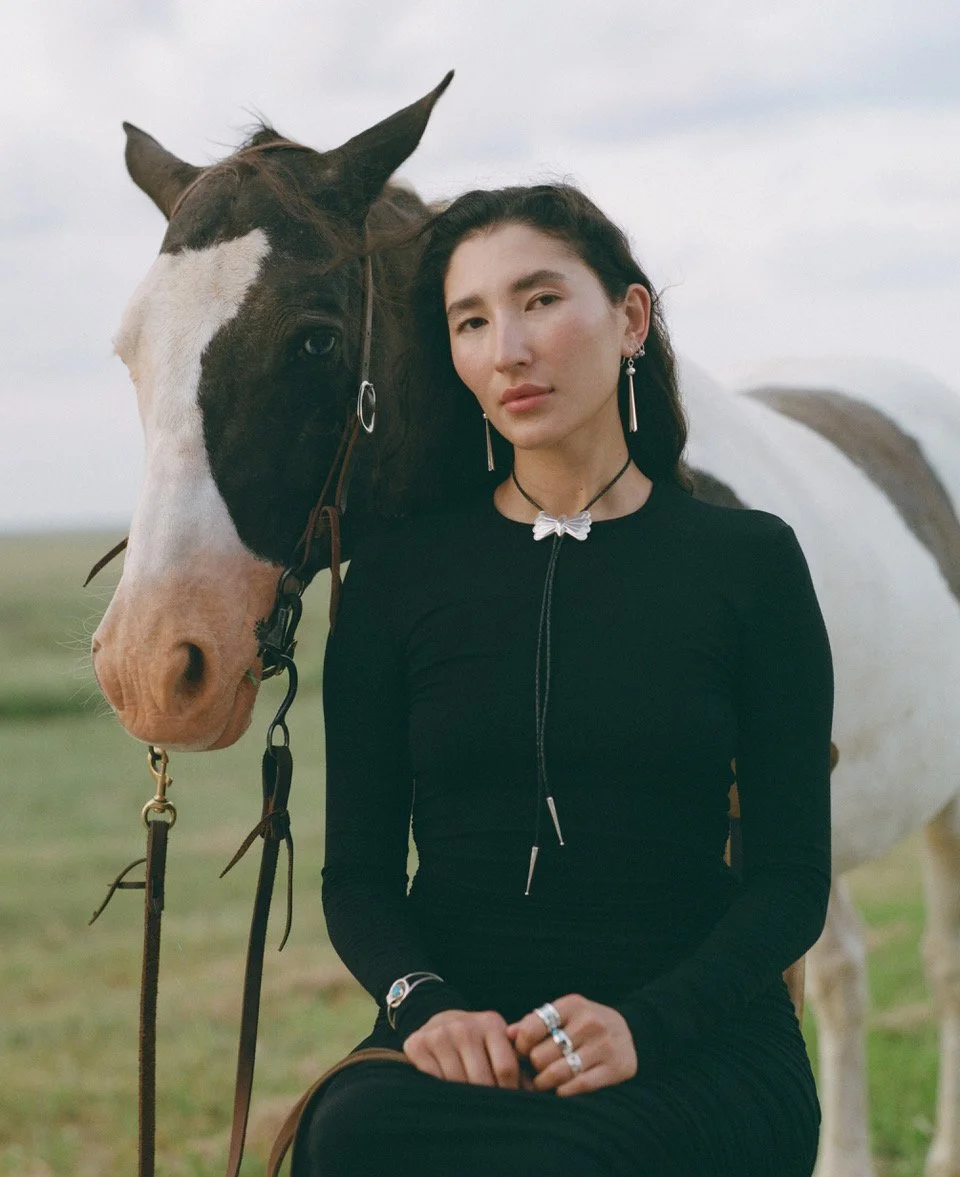
Photo: Annabel Louise Merritt
From Rome to Spain, London to L.A., Istanbul to Dubai — and back again
When I called Samantha to talk about her Native American jewelry line, Dineh, I assumed I’d hear all about the Southwest and her Navajo heritage. Instead, I felt like I had been transported into a James Bond movie. We talked diamonds and sapphires. Burberry and Max Mara. Paris and London. I was on the edge of my seat.
Yes, of course, we talked heritage and legacy, too. It was equally interesting. But the whole conversation with Samantha reminded me that you can’t judge a book by its cover. Ever.
Samantha comes from a long lineage of silversmiths dating back to her great-grandfather, Pablo Platero. He was followed by her grandparents, who became well-respected silversmiths known for their trademark, the holly leaf. They lived briefly in Santa Monica, working for Fred Harvey before moving back to the Southwest when they were granted land in Prewitt, New Mexico from the Navajo Nation. Today, the land operates as a family farm stocked with cows, sheep, chickens, and ducks. Unlike many of the plots assigned to her Indigenous community, her family’s land sits on a creek near a canyon, allowing them to harvest corn and squash as well.
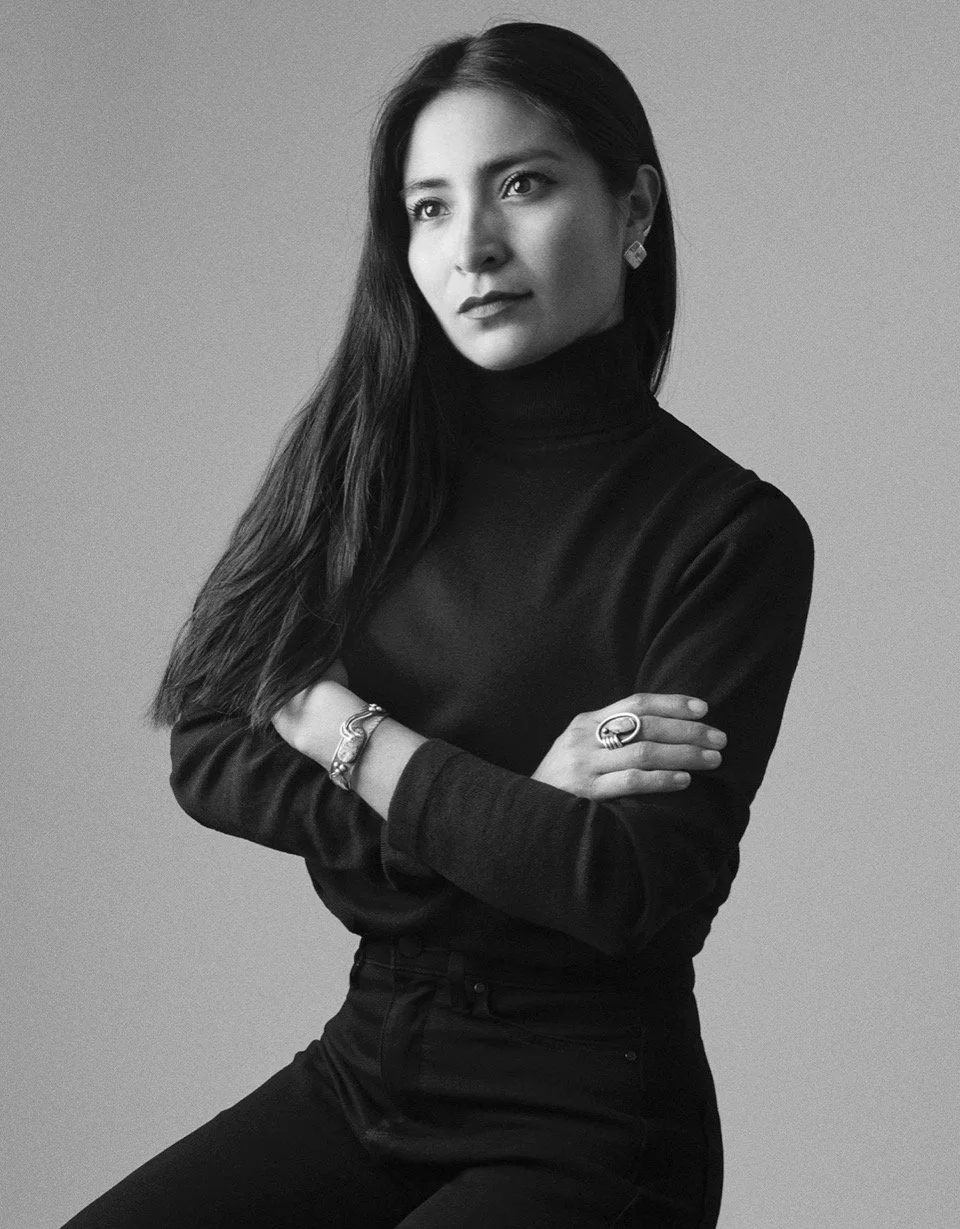
Samantha Platero, Creator & Designer Of Dineh Jewelry
Growing up, Samantha played on the farm with her cousins, interacting with nature and making up stories that screenwriters only dream about for their Netflix series. But at 9, Samantha’s mom moved them to Flagstaff so she could teach. Then at 18, Samantha was jetting off to Rome, a suggestion her mother made when Samantha expressed an urge to figure out what she wanted to do with her life before starting college. She had a lawyer aunt who worked for the Embassy fighting for Indigenous rights there. She brought Samantha back a doll from every country she visited, perhaps inspiring Samantha’s Rome adventure, which led her to speak fluent Italian.
When Samantha came home a year later to study at the University of Arizona, she knew she wasn’t done with Europe and soon learned enough Spanish to get accepted to a program in Madrid a few months later, where she became so fluent that locals thought she was one of their own.
But the truth was, no matter how far and wide Samantha traveled the globe over the next eight years in Europe, she would always belong to her Navajo Tribe, even if she had to experience diamonds and sapphires first.
So, after a year in Rome and Madrid, Samantha enrolled at the University of Westminster, where she studied fashion journalism and lived for five years. While there, she connected with a fine jeweler and mentor whom she credits with teaching her everything she knows about the international jewelry business.
She followed this mentor to Paris and Los Angeles. At this point, her mom was living and teaching in Istanbul, after stints in Russia and other international posts.
Then Samantha’s grandparents died. Her mom moved back to the farm.
At this point, Samantha moved to L.A. There, she connected with another jeweler for whom she worked in Venice for one year. Samantha describes her next mentor as kind and caring. “She taught me everything about elegance and grace. The kind of person I would love to grow into.”
While Samantha continued to dedicate herself to the jewelry business, she noticed that many jewelers were taking their inspiration from Native American culture. That’s when she realized she didn’t want to make jewelry that was merely inspired by it. She wanted to create the designs she grew up with:
“Authentic, not just inspired by,” Samantha said.
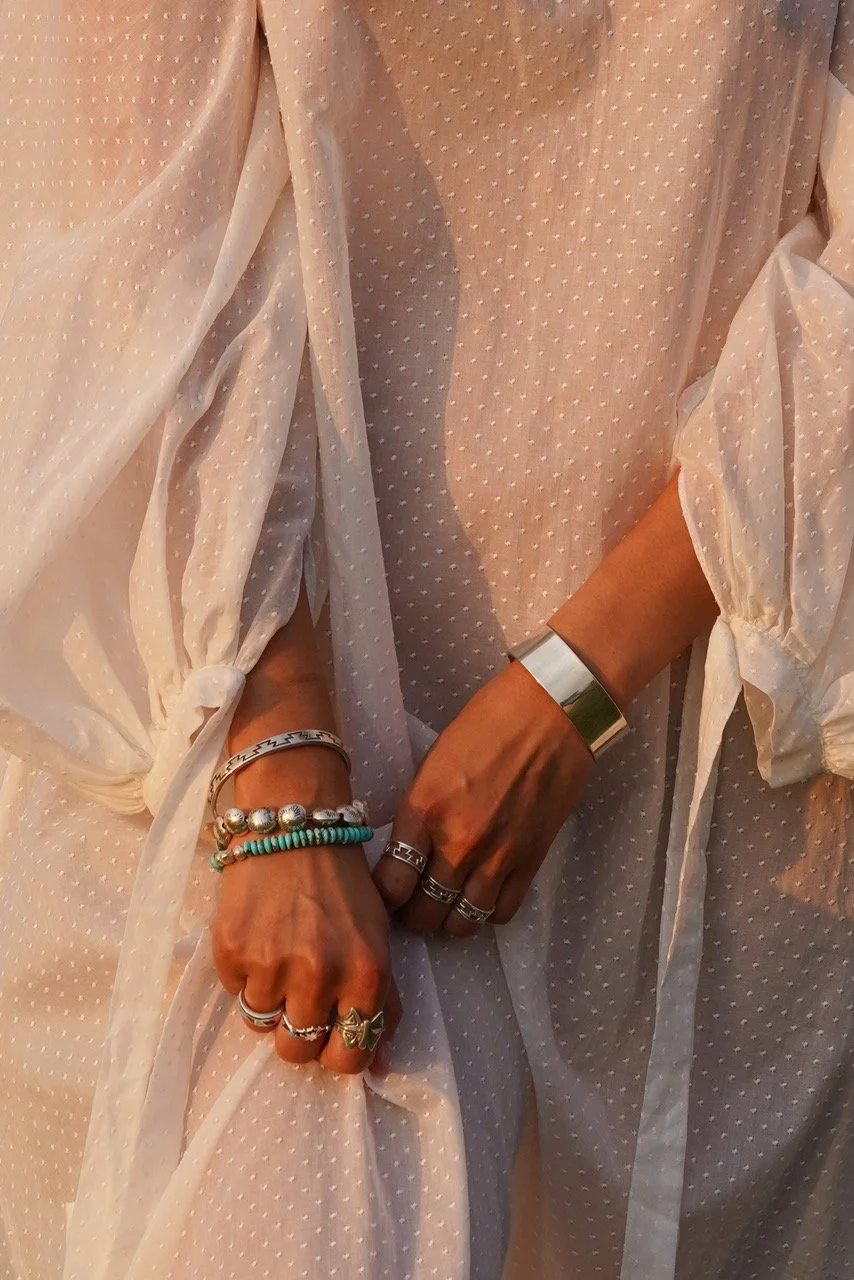
Photo: Annabel Louise Merritt
She moved to New Mexico, taking inspiration from lineage. Tradition. But with a twist.
Yes, there is another twist to Samantha’s fascinating journey.
She wanted to marry all that luxury she’d been exposed to in her European travels with Navajo turquoise. She wanted, in her own words, “to pair Cartier bracelets with Native American jewelry.”
She wanted: modern. Simple. Less heavy-handed.
Initially, she was met with some resistance. But realizing jewelry is personal and subjective, she forged on, trusting her instincts and vision. And Dineh was born.
Eight years later, and many collections later, Dineh continues to thrive and evolve. But what will never change is Samantha’s commitment to ensuring that ancestry, heritage, and tradition always inform her designs. Today she splits her time between Santa Fe, Flagstaff, and the family farm, a place she will always return to for grounding, humility, and to carry on her legacy.